Page Hero Image

Blogs

Home

/

blogs

Our Recent Blog Post

What Toxins Are Released After a Chiropractic Adjustment_ Facts vs Myths
February 22, 2026

What Toxins Are Released After a Chiropractic Adjustment? Facts vs Myths

A chiropractic adjustment triggers a biological process called a "healing crisis," where your body processes accumulated metabolic byproducts. While many people use the term "toxic release" to describe post-adjustment fatigue, the reality involves the release of cytokines and the redistribution of lactic acid. These physical sensations signal that your nervous system is successfully transitioning from a state of chronic tension to a state of optimal regulation.

Key Takeaways

  • What many call "toxic release" is actually a temporary healing crisis where the body processes metabolic byproducts like lactic acid and cytokines.

  • The audible sound during an adjustment is cavitation, which is the release of nitrogen gas from synovial fluid rather than the removal of physical toxins.

  • Symptoms like fatigue or mild soreness affect roughly 30% of patients and typically resolve within 24 to 48 hours as the nervous system regulates.

  • Proper hydration and light movement are essential to assist the lymphatic system and kidneys in filtering redistributed metabolic waste.

  • Post-treatment fatigue often reflects the body shifting from a stressed fight-or-flight mode into a calmer, restorative state focused on recovery and balance.

What Does "Toxic Release" Actually Mean?

We observe patients experiencing different sensations after their initial sessions at our Hess Spinal and Medical Center. You might feel a sense of profound relaxation or a temporary wave of fatigue. 

This physical response originates within the complex intersection of your musculoskeletal system and your central nervous system. 

When we perform a spinal adjustment, we restore motion to restricted joints. This restoration of movement initiates a cascade of chemical and neurological events.

The term "toxic release" functions as a popular metaphor for the liberation of metabolic waste from stagnant tissues. Your body constantly produces byproducts through normal cellular activity. 

Physical restrictions in the spine often hinder the efficient removal of these substances. Our chiropractic adjustments facilitate the opening of pathways. This allows the lymphatic system to transport these byproducts toward your primary filtration organs, like the liver and the kidneys.

Myth vs Fact: Debunking Chiropractic Misconceptions

Myth vs Fact_ Debunking Chiropractic Misconceptions

We believe in providing you with evidence-based clarity regarding your health. Many myths circulate about what happens during a spinal realignment. We want to provide the facts through a medical lens.

The Nature of Toxins

  • Myth: Adjustments squeeze environmental poisons or heavy metals directly out of your joints.

  • Fact: Your body processes metabolic byproducts like lactic acid and carbon dioxide during an adjustment. We are facilitating the natural disposal of cellular waste rather than removing external poisons.

The Source of the Audible Pop

  • Myth: The "cracking" sound signals the escape of toxic chemicals from the bone.

  • Fact: That sound is a physiological event called cavitation. It occurs when nitrogen gas and carbon dioxide bubbles form within the synovial fluid of the joint. It is a harmless pressure change.

The Cause of Fatigue

  • Myth: Feeling tired means the treatment caused internal damage or illness.

  • Fact: Fatigue indicates a shift in your autonomic nervous system. Your body is moving from a sympathetic "fight or flight" state into a parasympathetic "rest and digest" state. This transition requires significant energy as your body heals.

How Cytokine Shifts and Metabolic Processing

When we adjust your spine, we are doing more than moving bone. We are influencing the very chemistry of your bloodstream. Research indicates that spinal manipulation can lead to a temporary increase in certain signaling proteins. 

These proteins, known as cytokines, help regulate the immune system and manage the inflammatory response. Clinical data suggests that roughly 23% to 30% of patients experience local muscle soreness, while 10% to 15% report general fatigue as these chemical shifts occur.

Cytokine and Histamine Response

Our adjustments stimulate the mechanoreceptors within your joints. This stimulation sends a rush of information to the brain. In response, your body may release small amounts of histamines and prostaglandins. These substances are essential for tissue repair. 

We recently treated a patient who felt flu-like symptoms after her first adjustment. After we explained that her body was simply processing these signaling proteins and redistributing lactic acid, she prioritized hydration. By the next morning, her fatigue had eased and her chronic headaches had resolved completely.

Lactic Acid Redistribution

Muscles often tighten around a misaligned joint to provide stability. This chronic tension leads to a buildup of lactic acid within the muscle fibers. 

When we perform an adjustment, those muscles finally relax. This relaxation allows the trapped lactic acid to enter the bloodstream for filtration. 

Your body then processes this acid through the liver. Ensuring you have adequate hydration supports this metabolic journey. 

Studies show that while 5% to 10% of patients may experience a mild headache during lactic acid filtration, over 83% report high long-term satisfaction as their system stabilizes.

Hepatic and Renal Filtration

To understand how your body clears these substances, we must look at your internal filtration infrastructure. Once metabolic byproducts like lactic acid and cytokines enter the bloodstream, your liver (hepatic system) acts as the primary chemical processing plant to break them down.

Your kidneys (renal system) then filter these processed substances out of the blood for excretion. Without adequate water intake, these byproducts remain in circulation longer, which can extend the duration of a "healing crisis."

Neurological Safety and the Vagus Nerve Response for Spinal Manipulation

Neurological Safety and the Vagus Nerve Response for Spinal Manipulation

We prioritize your safety by monitoring how your nervous system reacts to spinal manipulation. Beyond chemical shifts, your body undergoes neurological recalibration. 

When we adjust the cervical or thoracic spine, we often stimulate the Vagus Nerve, the primary component of your parasympathetic nervous system.

A sudden shift in Vagus Nerve activity can lead to a brief "vasovagal response." This accounts for the temporary lightheadedness some patients report. According to the National Institutes of Health (NIH), the parasympathetic system governs "rest and digest" functions. As we remove spinal interference, your body shifts out of a state of high-cortisol stress. This transition is not a sign of toxicity but a sign of neurological decompression.

! ADVISORY

Post-adjustment reactions are normal biological signals. According to the World Health Organization (WHO) safety guidelines, minor musculoskeletal reactions occur in approximately one-third of patients and typically resolve within 24 to 48 hours. If you experience severe neurological changes, such as sudden numbness or loss of bladder control, you must contact a medical facility immediately.

Why You Feel Different During ‘Healing Crisis’

A "healing crisis" occurs when your body adapts to a new, healthier alignment. We see this frequently in patients who have lived with chronic spinal restrictions for years. 

Your nervous system must recalibrate its understanding of your body's position in space. This process is called proprioception. 

We often see patients whose muscles felt deep aches similar to a heavy workout after their first visit. This was their body "retracing" its proper posture, leading to improved strength within two days.

Common Symptoms of Post-Adjustment Recovery

  • Muscle Soreness: Your muscles are working in new ways to support your improved alignment.

  • Headaches: Tension release in the upper cervical spine can cause temporary pressure changes.

  • Increased Thirst: Your cells require water to transport metabolic waste through the lymphatic vessels.

  • Emotional Release: The nervous system stores stress. Releasing physical tension sometimes triggers a sudden sense of relief or emotional shifts.

Effective Steps to Support Your Recovery

Effective Steps to Support Your Recovery

We want you to achieve the best results from your care at Hess Spinal and Medical Center. Your actions after leaving our office play a vital role in how quickly your body processes these metabolic changes.

Prioritize Hydration

Water is the primary vehicle for your lymphatic system. It helps flush the metabolic byproducts from your bloodstream. We recommend drinking plenty of pure water throughout the day after your session. This simple step minimizes the intensity of any fatigue or headaches.

Engage in Light Movement

Gentle walking encourages blood circulation and lymphatic flow. It keeps your joints mobile while your body integrates the adjustment. Avoid heavy lifting or intense exercise for the first day to give your ligaments time to stabilize.

The Difference Hess Spinal & Medical Centers Make

Our approach at Hess Spinal and Medical Center combines the expertise of various medical professionals. We understand that spinal health affects your entire biological system. We monitor your progress closely to ensure your body is adapting correctly to treatment. 

Choosing an integrated medical center ensures that your chiropractic care is part of a comprehensive health strategy. We treat the whole person rather than just the symptoms. Our goal is to empower you with the knowledge and the physical health to live a vibrant life.

Frequently Asked Questions

Can a chiropractic adjustment cause a skin breakout? 

Improved lymphatic drainage sometimes pushes metabolic waste through the skin, which leads to temporary blemishes.

Why do I feel euphoric right after my adjustment? 

The adjustment triggers a sudden release of endorphins and dopamine within your brain.

Can the healing crisis cause sudden digestive changes? 

Activation of the vagus nerve during an adjustment stimulates your parasympathetic system and affects digestion.

Is it normal to feel emotional after a spinal adjustment? 

Physical release of chronic spinal tension often triggers a corresponding release of stored emotional stress.

How many sessions are needed until the detox symptoms stop? 

Most patients stop experiencing a healing crisis after the first 1 or 2 sessions as the body stabilizes.

Should I take pain medication for post-adjustment soreness? 

We recommend using natural movement and hydration as your primary tools for managing minor soreness.

Disclaimer: This article is for educational purposes and does not constitute medical advice. Please consult the specialists at Hess Spinal and Medical Center for a personalized diagnosis and treatment plan.


Read More
What to Expect from an Injury Rehabilitation Clinic During Your Recovery
February 14, 2026

What to Expect from an Injury Rehabilitation Clinic During Your Recovery

Your recovery process at an injury rehabilitation clinic follows a precise, evidence-based pathway designed to restore your normal mobility. We focus on a phased approach at Hess Spinal & Medical Center. 

Starting professional rehab within 0-2 days of an injury can reduce your total recovery time by up to 50% (14 days vs. 28 days for delayed starts). Our plan begins with diagnostic assessment and moves through therapeutic intervention to final performance optimization. 

We combine chiropractic care with physical therapy to accelerate the healing of soft tissue and bone while preventing recurring injury.

Key Takeaways

  • Combining chiropractic adjustments with physical therapy reduces the risk of needing opioid prescriptions by up to 55% and accelerates tissue healing.

  • Starting professional rehabilitation within 48 hours of an injury can effectively halve your total recovery time compared to waiting two weeks.

  • Recovery follows a structured biological path: Inflammation (Days 1–3), Repair (Weeks 2–6), and Remodeling (6 Weeks–6 Months).

  • Patients who adhere to prescribed home exercises are 30% more likely to reach their full functional goals than those who rely solely on in-clinic sessions.

  • Using the Limb Symmetry Index ensures your treatment is guided by data, not guesswork, providing a mathematical target for returning to sports or work.

1) First, You’ll Get The Initial Consultation

Your first visit to our clinic is the starting point for your entire recovery timeline. We conduct a comprehensive physical therapy assessment to identify the exact nature of your pathology. We observe how you move and identify any limitations in your joints or muscles.

(i) Comprehensive physical assessment and history

We begin by discussing the history of your accident or injury. We listen to your description of the symptoms and how they affect your daily life. This dialogue allows us to understand your personal goals and expectations. 

We then perform a series of manual tests to evaluate your current physical state. We measure your flexibility and check for any signs of muscle atrophy that may have occurred since the injury.

(ii) Diagnostic imaging and biomechanics

Our team uses digital radiography to see beneath the surface of your skin. Radiography images give clarity on the alignment of your spine and the health of your skeletal system. 

We perform a detailed gait analysis to see how you walk and distribute your weight. This analysis reveals subtle imbalances in your biomechanics that could lead to future complications. 

Diagnostic imaging and biomechanical assessments contribute to a 68% to 72% success rate in resolving musculoskeletal pain without surgery. We use these findings to ensure your treatment targets the specific areas requiring intervention.

2) Second, You’ll Get a Personalized Recovery Roadmap

2) Second, You’ll Get a Personalized Recovery Roadmap

Every patient arrives with a unique physiological profile and a specific set of needs. We believe in creating an individualized treatment plan that reflects your unique circumstances. We prioritize transparency during this stage so you always know what to expect.

(i) Synergy of chiropractic care and physical therapy

We take pride in our multimodal approach to healing. Our chiropractors perform precise chiropractic adjustments to ensure your nervous system functions at its peak. 

Simultaneously, our physical therapists guide you through movements that stabilize the surrounding musculature. This combination ensures that your structural alignment and your functional strength improve in tandem. 

We find that this integrated method provides superior outcomes for victims of auto accidents and sports-related trauma. Patients using an integrated chiropractic and physical therapy approach report a 55% lower risk of requiring opioid prescriptions for pain management.

(ii) Setting objective recovery metrics

We use the Limb Symmetry Index to compare your injured side to your healthy side. This objective data allows us to track your progress with mathematical precision. 

We establish baseline metrics during your first week and revisit them regularly. Knowing your exact percentage of strength return keeps you motivated and provides a clear picture of your progress. 

We adjust your plan based on these numbers to ensure you always face the right level of challenge.

3) Third, You’ll Experience Therapeutic Modalities Inside the Clinic

3) Third, You’ll Experience Therapeutic Modalities Inside the Clinic

We use different tools to help your healing process with chiropractic care. These modalities reduce your discomfort and prepare your tissues for more intensive exercise. Each piece of technology in our facility serves a specific purpose in your recovery.

(i) Hydrotherapy for gentle resistance

We use warm water therapy to assist patients who find weight-bearing exercises difficult. The buoyancy of the water supports your body weight and reduces the stress on your joints. This environment allows you to practice walking or moving your limbs with significantly less pain. 

Hydrotherapy is particularly effective during the early stages of recovery when inflammation levels remain high. We find that our patients enjoy the soothing nature of the water while they regain their confidence in their physical abilities.

(ii) Electrical stimulation and pain management

Our clinic employs electrical stimulation, often called E-stim, to manage your pain and promote muscle re-education. 

We place small electrodes on your skin that send gentle impulses to your nerves. This process helps to block pain signals and encourages your muscles to contract correctly. 

We use this technology to prevent muscle wasting during periods of limited activity. It serves as an excellent bridge between the passive phase of healing and the active phase of exercise.

(iii) Manual therapy and soft tissue work

We spend significant time performing hands-on techniques to improve your tissue health. Our therapists use manual therapy to mobilize stiff joints and break down scar tissue. 

We apply specific pressure to your muscles to increase blood flow and reduce tension. This direct contact allows us to feel exactly how your body is responding to the treatment. 

We find that manual therapy often provides immediate relief from the tightness that follows an acute injury.

4) Fourth, We’ll Manage Your Recovery Timeline and Expectations

The speed of your recovery depends on many factors. This includes the severity of your injury and your overall health. We encourage a perspective that views recovery as a steady progression rather than an overnight event.

  • The acute phase focuses on reducing edema and protecting the injured site.

  • The subacute phase introduces gentle movement to restore basic mobility.

  • The strengthening phase builds the muscle mass necessary for daily tasks.

  • The functional phase prepares you to return to work or sports.

While every injury is unique, standard healing for muscle tissue typically ranges from 2 to 4 weeks, while ligament and tendon repair can extend from 6 to 12 weeks. 

We monitor your status at every session to ensure you move through these phases at the safest possible speed. We celebrate every milestone you reach and provide the encouragement you need to stay focused on your long-term health.

5) Finally, You’ll Be Suggested Some Home Exercise Programs

5) Finally, You’ll Be Suggested Some Home Exercise Programs 

We provide you with a structured home exercise program to maintain the gains you make in our clinic. The time you spend outside our facility is just as important as the time you spend with us. We design these routines to be simple yet effective.

(i) Consistency and proprioception

Doing your exercises at home helps your brain reconnect with your body. We call this proprioception, which is your ability to sense where your limbs are in space. 

Regular practice strengthens these neural pathways and improves your balance. We provide clear instructions and demonstrations so you feel confident performing these movements on your own. Consistent effort at home leads to faster results and a more durable recovery.

(ii) Supporting the patient and the caregiver

We recognize the vital role that family members play in the healing process. We invite caregivers to participate in education sessions so they understand how to assist their loved ones safely. 

We provide tips on managing the logistics of recovery and offer advice on maintaining a positive home environment. 

Our team is always available to answer questions from both the patient and their support system. We believe that a well-informed family leads to a more successful outcome for everyone involved.

We Optimize Your Healing for a Return to Regular Activity

Our ultimate goal is to see you return to the activities you love. For the weekend warrior or the dedicated athlete, we focus on sports-specific drills. We analyze your form to ensure you use your body efficiently and safely. 

We teach you how to move in ways that minimize the risk of recurring injury. For the professional returning to the workforce, we simulate job-related tasks to ensure you can perform them without pain. We stand by you until you feel fully restored and ready to face the world with confidence.

Contact Hess Spinal and Medical Center today to schedule your initial assessment and start your journey toward wellness.

Frequently Asked Questions

How do I know if the pain during my rehab session is good or bad?

Good pain feels like a dull ache or muscle fatigue, while bad pain manifests as sharp or stabbing sensations that require an immediate stop.

Can I stop coming to the clinic once I feel eighty percent better?

Continuing treatment until you reach full strength is essential to ensure your joints are stable and to prevent the injury from returning.

How do I explain my recovery progress to my boss if I look healthy?

We provide objective medical documentation and progress reports that detail your functional limitations and your specific path toward full duty.

Do I need a doctor referral before I visit Hess Spinal for injury rehab?

Many insurance plans allow you to access our services directly, although we always coordinate closely with your primary physician for your safety.

Will my insurance cover the full duration of my treatment after an auto accident?

Our billing specialists work directly with your Personal Injury Protection coverage to ensure your focus remains entirely on your physical healing.

What happens if I hit a plateau and stop seeing progress for a week?

We view plateaus as a signal to adjust your treatment intensity or change your exercises to challenge your body in new ways.


Disclaimer: This article is for educational purposes and does not constitute medical advice. Please consult the specialists at Hess Spinal and Medical Center for a personalized diagnosis and treatment plan.


Read More
The Benefits of Hydrotherapy Massage for Auto Injury and Muscle Recovery
February 8, 2026

The Benefits of Hydrotherapy Massage for Auto Injury and Muscle Recovery

When you’re stuck in the middle of a slow muscle recovery process, sometimes the best thing you can do is just… get in the water.

The benefits of hydrotherapy massage go way beyond just a fancy soak in a tub. We’re talking about using water pressure and temperature to kickstart your healing. For an auto injury, where your muscles are guarded and tight from the shock of the impact, the buoyancy of the water takes the weight off your joints. It’s like giving your nervous system a "reset" button.

Our staff at Hess Spinal and Medical Centers is aware that each patient's experience with trauma is unique. Treating traumatic injuries is our area of expertise.

1) How Hydrotherapy Massage Works for Trauma Recovery

When most people hear the word "hydrotherapy," they might picture a swimming pool or a spa hot tub. While those have their place, clinical hydrotherapy for trauma recovery is quite different. We utilize specialized equipment designed to deliver the therapeutic benefits of water massage in a controlled medical setting.

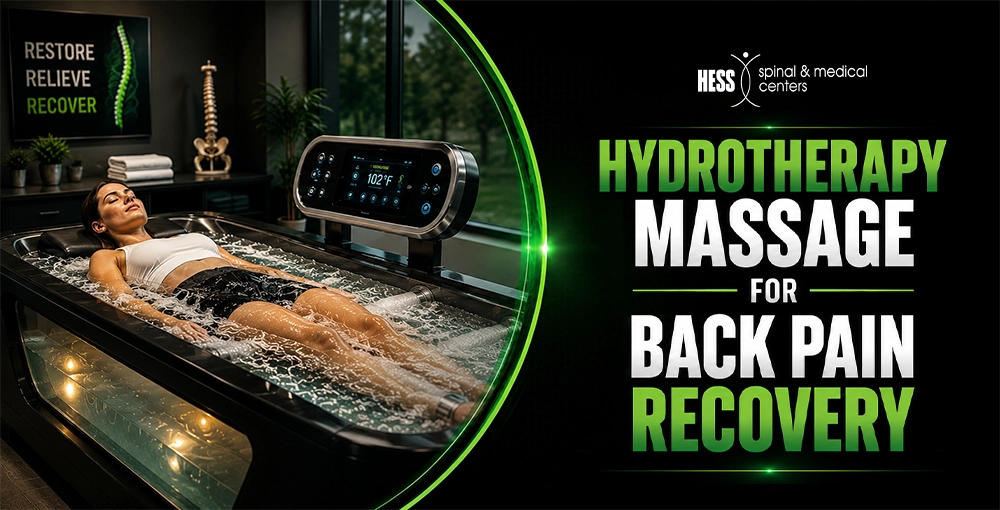
Often referred to as dry hydrotherapy, this treatment involves a special bed or table equipped with internal water jets. You lie comfortably on a waterproof barrier while heated, pressurized water moves underneath you. You remain completely dry and fully clothed throughout the entire session.

This distinction is incredibly important for auto accident victims. Following a crash, your body is often in a state of high alert. Your muscles are guarding injured areas, and the thought of disrobing for a traditional manual massage might feel uncomfortable or even physically impossible due to pain. Dry hydrotherapy allows you to receive the benefits of deep tissue manipulation without the vulnerability or intense physical pressure associated with manual massage therapy in the early stages of healing. It provides a consistent, soothing pressure that we can adjust to match your current tolerance levels.

2) How To Reduce Pain and Stiffness After a Car Accident

2) How To Reduce Pain and Stiffness After a Car Accident

The primary complaint we hear from patients following a collision is intense stiffness that limits their ability to perform basic daily tasks like getting dressed or turning their head while driving. This is usually the result of a soft tissue injury. These injuries involve damage to muscles, ligaments, and tendons that do not show up on standard X-rays; however, they cause deeply debilitating pain.

The heat component of hydrotherapy is critical here. Warmth is a natural muscle relaxant. When heated water jets target tense areas, it encourages muscle fibers to loosen their grip. This is particularly effective for whiplash relief. Whiplash is a common and severe neck injury caused by the rapid back-and-forth whipping motion during impact. The resulting muscle tension in the neck and upper back can lead to headaches and severe restrictions in movement.

The gentle, pulsating pressure of hydrotherapy helps to soothe these inflamed tissues. It interrupts pain signals being sent to the brain, providing much-needed respite from constant discomfort. Failing to address this early pain and stiffness can lead to long-term complications. We often emphasize that there are significant risks to ignoring conditions like whiplash. To learn more about these risks, read our article on the dangers of untreated whiplash.

After reducing initial pain levels with hydrotherapy, we can help you reach a point where you can tolerate other necessary treatments, such as chiropractic adjustments or physical therapy exercises.

3) Muscle Recovery and Flexibility Through Water Therapy

Recovery is not just about stopping the pain. It is about restoring the function you had before the accident. When muscles are injured during a crash, they often develop adhesions or knots as they heal. Furthermore, the lack of movement due to pain can cause muscles to shorten and atrophy over time.

Hydrotherapy massage actively assists in muscle recovery by addressing these issues directly. It covers larger areas more consistently. This action helps to mobilize soft tissues, breaking down minor adhesions before they become permanent issues.

This therapy is used to gently stretch muscle fibers and improve overall flexibility. Restoring range of motion is a gradual process. Hydrotherapy prepares the body for movement by warming up the tissues first. 

When your muscles are warm and relaxed, they are more pliable and less prone to re-injury during rehabilitative exercises. We find that patients who incorporate hydrotherapy into their treatment plans often regain their mobility faster than those who rely solely on pain medication and rest.

4) The Role of Improved Circulation in Post-Injury Healing

4) The Role of Improved Circulation in Post-Injury Healing

Healing requires energy and resources. Your body needs to deliver oxygen and vital nutrients to damaged cells after an injury. Your circulatory system transports these essentials. Unfortunately, injury and resulting inflammation often act like a traffic jam, restricting blood flow to the very areas that need it most.

Hydrotherapy is an excellent tool for improving local circulation. The combination of heat and pressure causes blood vessels to dilate or widen. This increased blood flow brings a surge of healing nutrients to injured soft tissues.

According to the National Center for Complementary and Integrative Health (NCCIH), therapies like massage have been shown to help manage various pain conditions, supporting the idea that manipulating soft tissues aids in the healing process. Furthermore, the mechanical pressure of the water helps move lymphatic fluid. By assisting the lymphatic system, hydrotherapy helps reduce swelling and inflammation faster than rest alone.

The scale of this issue in the United States is massive. Data from the Centers for Disease Control and Prevention (CDC) indicate that motor vehicle crashes lead to millions of emergency department visits annually. This highlights the critical need for effective post-crash rehabilitation strategies. We use hydrotherapy to speed up the physiological processes necessary for true tissue repair.

5) Why Choose Hess Spinal and Medical Centers for Your Rehabilitation

5) Why Choose Hess Spinal and Medical Centers for Your Rehabilitation

Choosing the right provider for Florida auto accident recovery is a significant decision. You need a team that understands the medical complexities of traumatic injuries as well as the logistical challenges of auto insurance claims.

At Hess Spinal and Medical Centers, we provide comprehensive care under one roof. 

  • Our team combines various therapeutic treatments to achieve the best possible outcome for your specific injuries. 

  • We include hydrotherapy massage in many of our treatment plans because we have seen its unique ability to comfort patients while actively promoting physical healing.

  • We realize that many people delay treatment because they are worried about costs or paperwork. We are here to handle those burdens for you so you can focus entirely on getting better. 

  • Our experience with auto injury cases means we know how to document your injuries accurately and work with insurance providers to ensure you receive the care you deserve.

Frequently Asked Questions About Hydrotherapy and Auto Injury

1. Is hydrotherapy massage painful for acute auto injuries? 

Generally, no. That is the beauty of dry hydrotherapy. The pressure is adjustable and spread out over a wider area compared to manual massage. Most patients find it incredibly relaxing and comforting, even when they are too sore for other types of touch therapy.

2. How does hydrotherapy fit in with chiropractic care? 

It is a perfect complement. We often use hydrotherapy before a chiropractic adjustment to relax tight muscles. Loose muscles make the adjustment easier and more effective. It is part of a complete treatment timeline.

For more on treatment timelines, see our post on how long you should see a chiropractor after an accident.

3. I have dizziness after my accident. Is this therapy safe? 

Yes, it is generally safe because you are lying down securely. Dizziness and vertigo are common after accidents, often related to neck trauma. While hydrotherapy helps relax the neck, we also have specific chiropractic protocols for those symptoms.

Learn more about how we treat these symptoms in our article on chiropractic care for vertigo or dizziness.

4. Do I need a referral to receive this treatment at your center? 

In Florida, you do not typically need an outside referral to seek care at our centers following an auto accident. We can perform the initial evaluation and determine if hydrotherapy is appropriate for your specific injuries as part of your Personal Injury Protection (PIP) coverage.

Restore Your Health and Wellness After a Car Accident

Dealing with the aftermath of a car accident is never easy, but you do not have to accept chronic pain as your new normal. Hydrotherapy massage is just one of the advanced tools we use at Hess Spinal and Medical Centers to help you heal. It offers a gentle, effective way to reduce pain, decrease stiffness, and speed up muscle recovery.

If you have been injured in a collision, we invite you to contact us for an evaluation. Let our family help your family get back on the road to health.

Disclaimer: This article is for informational purposes and does not constitute medical advice or form a professional relationship. For personalized physical therapy assessments, contact Hess Spinal and Medical Centers


Read More
What Lifestyle Changes Can Support Your Chiropractic Treatment Results_
Individual Treatment PlansJanuary 24, 2026

What Lifestyle Changes Can Support Your Chiropractic Treatment Results?

We love seeing the look of relief on your face when you walk out of Hess Spinal and Medical Center. That immediate release of tension and the return of mobility is why we do what we do. It is a great feeling to have your spine aligned and your nervous system functioning clearly.

However, we also know the reality of what happens when you leave our office. You go back to your job, your commute, your chores, and your stress. The world is full of physical and emotional stressors that want to pull your spine right back into its old and painful patterns.

Chiropractic care is a partnership. We can do the heavy lifting in the office to correct subluxations and restore proper motion. However, your daily habits determine if those adjustments hold or if your body regresses before your next visit.  Here is how you can support your chiropractic treatment results from home.

(1) Hydration Is Medicine for Your Spine

You have likely heard us mention water intake during your appointments. Hydration is arguably the single most critical factor in spinal health.

Your spine is made of vertebrae and discs. The intervertebral discs act as shock absorbers. They prevent your bones from rubbing together and allow your spine to move freely. These discs are composed largely of water. In fact, intervertebral discs are almost 80% water when they are healthy.

Throughout the day, gravity compresses your spine. This squeezes water out of the discs. It is a natural process. However, you must replenish that fluid. 

If you are chronically dehydrated, your discs cannot plump back up. They become brittle and thin. This leads to less cushioning for your nerves and makes it much harder for your body to hold a chiropractic adjustment.

Tips for Spinal Hydration:

  • Drink half your body weight in ounces. If you weigh 160 pounds, then you should aim for 80 ounces of water daily.

  • Start early. Drink a large glass of water immediately upon waking to rehydrate after sleep.

  • Limit diuretics. Coffee and soda can encourage fluid loss. For every cup of coffee you drink, try to drink an extra cup of glass of water to balance it out.

  • Eat your water. Foods like watermelon, cucumbers, and celery have high water content and can help you reach your goals.

(2) The Working Conditions of Modern Life

We see more "tech neck" and posture-related issues now than ever before. Technology has improved our lives in many ways, yet it has been terrible for our spines. Most of us spend our days hunched over computers or looking down at smartphones.

This forward head posture is a major problem. For every inch your head moves forward from your shoulders, the weight of your head on your neck doubles. This puts immense strain on the cervical spine and the muscles of the upper back. It pulls your vertebrae out of alignment and creates the tension headaches many of you experience.

You cannot always avoid using a computer or a phone. However, you can change how you use them to stop undoing the work we do in the clinic.

(i) Improving Your Workstation:

  • Lift up your screen. Your monitor should be at eye level. You should not have to look down to see your work. Stack books under your monitor if you need to raise it.

  • Check your chair. Your feet need to be flat on the floor with your knees at a 90° angle. If your feet dangle, then it pulls on your lower back.

  • Shoulders back. Conscious effort is required here. Roll your shoulders back and down. Do not let them creep up toward your ears while you type.

(ii) Mobile Device Habits:

  • Lift the phone. Bring your phone up to your face instead of dropping your chin to your chest.

  • Use voice to text. This reduces the amount of time you spend looking down at the keyboard.

  • Take breaks. Set a timer for every thirty minutes. Put the phone down and stretch your neck.

(3) Motion Is Lotion for Your Joints

Motion Is Lotion for Your Joints

When you are in pain, the natural instinct is to lie in bed and not move. While rest is sometimes necessary for acute injuries, prolonged inactivity is usually the enemy of healing. 

Your joints have no direct blood supply. They get their nutrients through motion. Movement circulates synovial fluid, which lubricates the joints and flushes out waste products.

A sedentary lifestyle causes your muscles to weaken and your joints to stiffen. This tightness creates a tug-of-war on your spine. Strong and flexible muscles act as a natural brace for your back. They hold your vertebrae in the correct position.

We want you to focus on low-impact movement. In fact, high-impact exercise can sometimes be detrimental immediately after an adjustment if your body is not ready for it. We want gentle and consistent motion.

Beneficial Movements:

  • Walking. This is the best thing you can do for your back. It engages the core muscles and keeps the hips mobile without putting too much stress on the body.

  • Cat-cow stretch. This yoga pose is excellent for moving the spine through its full range of motion.

  • Hamstring stretches. Tight hamstrings pull on the pelvis and cause lower back pain. Keeping them loose relieves pressure on the lumbar spine.

  • Core activation. Simple exercises like planks help build the abdominal muscles that support the front of your spine.

(4) Sleep Position Matters

You spend roughly one-third of your life asleep. If you are sleeping in a twisted or unsupported position, you are doing damage to your body for 8 hours every single night.

We often have patients who leave the office feeling great but wake up the next morning in pain. This is almost always due to sleep mechanics. Your body does its deepest healing while you sleep. You need to provide a neutral environment for that healing to happen.

Stomach sleeping is generally the worst position for chiropractic patients. It forces you to turn your head to the side to breathe. This twists the cervical spine and strains the neck muscles all night. It also causes the lower back to sway, which jams the lumbar joints together.

How to Sleep for Spinal Health:

  • Back sleepers. This is often the best position for the spine. Place a small pillow under your knees. This helps maintain the natural curve of your lower back and relieves tension.

  • Side sleepers. If you sleep on your side, then you must put a pillow between your knees. Without it, your top leg slides forward and twists your pelvis. This spinal twist creates significant lower back torque. The pillow keeps your hips stacked and aligned.

  • Pillow height. Your pillow should keep your neck neutral. If it is too thick, then your head is propped up too high. If it is too thin, then your head drops back. You want your nose to align with the center of your chest.

(5) Nutrition and Inflammation

Nutrition and Inflammation

Pain is often a result of inflammation. When you have a misalignment, the tissue around it becomes inflamed. This is your body trying to protect itself. However, chronic inflammation makes you more sensitive to pain and slows down the healing process.

Your diet plays a massive role in your inflammation levels. The standard American diet is full of inflammatory triggers. Sugar, processed foods, and unhealthy fats act like fuel for the fire of inflammation.

When you are under chiropractic care, you want to give your body the building blocks it needs to repair tissue. You want to eat foods that cool down inflammation rather than heat it up.

Foods to Prioritize:

  • Omega-3 fatty acids: Found in fatty fish like salmon and sardines, omega-3s help reduce inflammation and support heart and brain health.

  • Leafy greens: Spinach, kale, and similar greens are rich in fiber and antioxidants that support digestion and overall wellness.

  • Lean protein: Foods like chicken breast, eggs, tofu, and legumes help maintain muscle, support repair, and keep you full longer.

  • Berries: Blueberries, strawberries, and raspberries provide antioxidants and natural sweetness while supporting immune and cellular health.

(6) Manage Stress Levels

It is easy to overlook the mental component of back pain. However, the mind and body are connected. When you are stressed, your body produces cortisol. This stress hormone causes your muscles to tighten up.

Most people carry their stress physically. You might notice that when you are anxious, your shoulders rise up toward your ears or your jaw clenches. This chronic muscle tension pulls on your skeletal structure. It creates a constant resistance against the adjustments we provide.

We know we cannot eliminate all stress from your life. However, managing it is a key part of your treatment plan. If your muscles are constantly tight from stress, they will pull your vertebrae right back out of place the moment you leave our office.

Simple Stress Reduction Techniques:

  • Deep breathing. Taking deep belly breaths activates the parasympathetic nervous system. This tells your brain that you are safe and allows your muscles to relax.

  • Epsom salt baths. The magnesium in the salt absorbs through the skin to relax muscles. The warm water increases circulation to heal tissues.

  • Mindfulness. Taking 5 minutes a day to sit quietly can lower cortisol levels significantly.

(7) Consistency Is The Key

 Consistency Is The Key

The final and perhaps most important change is your mindset regarding the treatment plan itself.

Chiropractic care is cumulative. Each visit builds on the last one. We are retraining your body. Your spine has likely been misaligned for years. It has developed muscle memory that accepts that bad posture as normal. 

We are working to break that habit and instill a new and healthy alignment. If you miss appointments or wait until you are in severe pain to come back, we are constantly starting over from square one. 

The patients who stick to the recommended schedule are the ones who see lasting results. They move from pain relief care to corrective care and eventually to wellness care.

If you are overdue for an adjustment or want to discuss a customized plan to support your lifestyle, contact Hess Spinal and Medical Center today. 

Disclaimer: This article is for general informational purposes only and does not constitute medical advice or establish a provider-patient relationship. For personalized physical or medical assessments and treatment, please contact Hess Spinal and Medical Center.

Read More
What’s the Real Difference Between a Chiropractic Adjustment and a Massage_
Chiropractic ManipulationJanuary 17, 2026

What’s the Real Difference Between a Chiropractic Adjustment and a Massage?

When you are in pain, you often just want relief. You do not care much about the technical definitions. You just want the stiffness in your neck to vanish or the throbbing in your lower back to stop. We see patients at the Hess Spinal and Medical Center every day who walk through our doors looking for answers after an auto accident or a sports injury.

Patients often ask us if they need a chiropractic adjustment or if a massage would serve them better. It is a valid question. Both treatments feel therapeutic, can lower your pain levels, and involve a hands-on approach to healing.

However, assuming they are the same thing is a mistake. They are two separate medical therapies designed to fix two very different problems within your body. We want to help you understand the specific roles of these therapies so you can make the best decision for your health.

(1) The Main Difference is Structure vs. Soft Tissue

Chiropractic care focuses on the hard tissue and the nervous system. Massage therapy focuses on the soft tissue and the circulatory system.

If you have a structural issue in your spine, a massage will only provide temporary relief. It might numb the sensation of pain for a few hours, but the root cause remains. 

If you have a purely muscular issue, an adjustment might not be necessary. Understanding this biological difference is the first step toward true recovery.

(2) How Does Chiropractic Adjustment Help?

Chiropractic care is the foundation of what we do at Hess Spinal. It is a medical discipline focused on the diagnosis and treatment of mechanical disorders of the musculoskeletal system. The primary therapy we use is the spinal adjustment.

Many people associate the adjustment with the popping sound it often produces. We want to look past the sound and focus on the physiology. The goal of an adjustment is to correct a subluxation. A subluxation is a slight misalignment of the vertebrae in your spine.

When a vertebra moves out of its natural position, it creates a cascade of problems. The most critical issue is nerve interference. 

Your spine houses your spinal cord, which is the superhighway of your nervous system. When a bone is out of place, it puts pressure on the nerves exiting the spine.

This pressure causes pain, numbness, and dysfunction. It can even affect organs and systems seemingly unrelated to your back.

Here is what happens during an adjustment:

  • Restoration of Joint Mobility: We apply a controlled force to a spinal joint. This moves the joint back into proper alignment and restores its range of motion. You likely notice you can turn your head further or bend over easier immediately after treatment.

  • Nerve Decompression: By realigning the vertebrae, we remove the pressure from the affected nerve. This is vital for patients suffering from sciatica or shooting pain in the extremities.

  • Reduction of Inflammation: Misaligned joints cause local inflammation. Correcting the structure reduces the body’s need to send inflammatory markers to the area.

  • Pain Relief Without Medication: We address the mechanical source of the pain rather than masking the symptoms with painkillers.

This is why chiropractic care is often the first line of defense for auto accident injuries. The force of a car crash whips the spine back and forth. This creates significant structural misalignments. 

A massage therapist cannot push a vertebra back into place. Only a chiropractor has the training and leverage to perform that structural correction.

(3) What Does Massage Therapy Do?

 What Does Massage Therapy Do?

Massage therapy acts as the perfect counterpart to chiropractic care. While the chiropractor looks at the bones and nerves, the massage therapist looks at the soft tissues, such as muscles, tendons, and ligaments. 

Muscles often react to injury by tightening up. This is a protective mechanism known as "guarding." Your body senses instability in the spine, so it orders the surrounding muscles to clamp down to prevent further movement. While this is helpful in the short term, chronic muscle tension leads to its own set of problems. 

Muscle fibers can develop adhesions or knots. These are areas where the muscle tissue has become sticky and stuck together. These knots restrict blood flow and trap toxins like lactic acid.

Here is how massage therapy addresses these issues:

  • Improved Circulation: The physical manipulation of muscle tissue forces fresh blood into the area. This blood brings oxygen and nutrients that are essential for repair. It also flushes out metabolic waste products that contribute to soreness.

  • Breaking Up Scar Tissue: After an injury, the body repairs muscles with scar tissue. This tissue is less flexible than healthy muscle. Targeted massage helps break down this fibrous tissue to restore flexibility.

  • Stress Reduction: Pain causes mental and physical stress. Massage triggers the release of endorphins. Lowering stress levels actually helps your body heal faster.

  • Releasing Trigger Points: A skilled therapist can identify specific tight spots that refer pain to other parts of the body. Releasing these trigger points can provide immense relief for headaches and neck tension.

It is important to view massage as a therapeutic medical treatment. In the context of injury recovery, it plays a vital role in restoring the function of your soft tissues.

(4) Which One Do You Need?

Determining which treatment is right for you depends entirely on your symptoms and the history of your injury. We always recommend a professional evaluation, but there are signs you can look for on your own.

You likely need a chiropractic adjustment if:

  • You feel sharp or shooting pain. This usually indicates nerve involvement. A pinched nerve requires structural correction to relieve the pressure.

  • You have limited range of motion. If you cannot turn your head to check your blind spot or cannot bend down to tie your shoes, a joint is likely locked or misaligned.

  • You were in an auto accident. The forces involved in a crash almost always cause structural damage to the spine. Whiplash is a structural injury that requires structural treatment.

  • You have numbness or tingling. Sensations running down your arms or legs are classic signs of a disc issue or nerve entrapment.

  • Your pain is located in the joints. If the pain feels deep within the spine, hips, or knees, it is likely a skeletal issue.

You likely need massage therapy if:

  • Your pain feels like a dull ache. Generalized soreness usually stems from muscle fatigue or overuse.

  • You feel "tight" but can still move. If you have a full range of motion but feel stiffness in the meaty part of the muscle, it is likely a soft tissue issue.

  • You are stressed or anxious. If you carry your stress in your shoulders and neck, massage is excellent for forcing those muscles to relax.

  • You have post-workout soreness. Delayed onset muscle soreness from exercise responds very well to massage techniques that improve blood flow.

(5) Why "Both" Is Often the Best Answer

Why "Both" Is Often the Best Answer

We have spent this article comparing these two treatments. However, the truth is that they work best when used together. In fact, for many of our patients at Hess Spinal, we prescribe a treatment plan that includes both chiropractic adjustments and soft tissue therapy.

Let’s say your spine is misaligned. Your muscles work overtime to compensate for this instability. They become tight and inflamed. If we only adjust the spine, those tight muscles might pull the vertebrae right back out of place the moment you stand up.

Now consider the reverse. If we massage the muscles until they are completely relaxed but leave the spine misaligned, the body will sense the instability. It will immediately tighten the muscles up again to protect the spine.

This creates a cycle of pain that is hard to break with just one method.

By combining the treatments, we address the problem from both angles. We align the spine to ensure the nervous system is functioning correctly. We also treat the muscles to ensure they are relaxed and support the new alignment rather than fighting against it.

This combination of chiropractic adjustments and massage is particularly effective for auto accident injuries. The trauma from a crash affects everything from the vertebrae to the tiniest ligament. A comprehensive approach ensures that no part of the injury is overlooked.

(6) Trust the Experts with Your Recovery

Trust the Experts with Your Recovery

Pain is a complex signal. It is your body telling you that something is wrong. Recognizing that signal requires expertise. You do not need to guess whether your pain is muscular or structural or waste money on treatments that do not address the root cause of your discomfort.

Our physicians, doctors at Hess Spinal and Medical Centers, specialize in diagnosing the source of your pain. We look at your medical history and the mechanics of your injury. We use advanced imaging when necessary to see exactly what is happening inside your body.

Once we have a clear picture, we build a plan, which might lean heavily on chiropractic adjustments or focus more on therapy and rehabilitation. Most often, it will be a perfect blend of therapy designed to get you back to your life as quickly as possible.

Contact Hess Spinal and Medical Centers today. Whether you need an adjustment, therapy, or a combination of both, we are here to get you back to living pain-free.

Disclaimer: This article is for general informational purposes only and does not constitute medical advice or establish a provider-patient relationship. For personalized physical or medical assessments and treatment, please contact Hess Spinal and Medical Center.

Read More
Are Chiropractic Adjustments Painful_
Physical TherapyJanuary 8, 2026

Are Chiropractic Adjustments Painful?

For many first-time patients, the anticipation of a "crack" or "pop" during a session leads to a common question: Are chiropractic adjustments very painful? While the sounds associated with spinal manipulation can be startling, the procedure itself is designed to relieve pain rather than cause it. 

Hess Spinal and Medical Center prioritizes patient comfort by using controlled, precise movements to restore joint mobility. Most patients describe the sensation as a localized pressure followed by an immediate sense of relief, though it is normal to experience mild, temporary soreness (similar to the feeling after a good workout) as your body adapts to its new, healthy alignment.

By addressing the structural root of your discomfort without the risks of invasive surgery or addictive medication, we help you achieve a faster, more sustainable recovery.

1) Are Chiropractic Adjustments Painful? Let's Talk Sensation

Folks often get a bit spooked by the sounds they hear in the clinic or see on social media videos. Let’s set the record straight: that "pop" or "crack" isn't bone rubbing on bone. It is a biological process called cavitation. Within your joint capsules, there is a natural lubricant called synovial fluid. 

When a chiropractor performs a precise adjustment, the joint space opens just enough to cause a change in pressure. This change allows nitrogen and CO₂ bubbles to find their way out of the joint space.

Most of our patients tell us they feel a sudden, wonderful release of pressure, not a lick of sharp pain. In fact, clinical studies show that 94% of patients receiving manual manipulation experience significant pain reduction, compared to just 69% for standard medical care. 

You might feel a touch of soreness later that evening, kind of like you spent a good afternoon working in the garden or hitting the gym. That’s just your body getting used to being back where it belongs. At Hess Spinal and Medical Centers, we’re really gentle with our approach because we want you walking out with a smile.

2) Is It Safe? Choosing Natural Over Invasive

Is It Safe? Choosing Natural Over Invasive

When it comes to your health, safety is the name of the game. You'll be glad to know that the CDC recommends spinal manipulation as a safe, effective, non-invasive way to handle common aches like low back and neck pain.

We’re proud to offer a drug-free path to relief. This is especially vital given the ongoing opioid crisis. Research published in BMJ Open found that patients who see a chiropractor first have 90% decreased odds of needing long-term opioid prescriptions.

Before we ever lay a finger on you, we do a thorough check to make sure your body is ready. Sometimes, patients wonder if they need a specialist or an MRI before they come to us. If you’re at that crossroads, you might find clarity in our guide on whether it is better to see a chiropractor or get an MRI first for back pain.

3) What Exactly Does a Chiropractor Do?

A chiropractor is a primary healthcare professional focused on the musculoskeletal and nervous systems. The core of their practice revolves around the idea that proper spinal alignment allows the body to heal itself. Because we are primary care providers, you typically do not need a referral to see us.

A chiropractor’s main role is to restore proper function and alignment to the body. We look for subluxations. The areas where a spinal joint isn't moving quite right, which can irritate the nearby nerves. They don't just treat the site of pain; they look for the root cause.

Core Activities and Techniques:

  • Diagnosis and Assessment: Taking a thorough account of past injuries, current pain, and lifestyle goals.

  • Physical Exam: Performing orthopedic and neurological tests to check reflexes, range of motion, and muscle strength.

  • Diagnostic Imaging: Using X-rays to see the internal structure of the spine and identify specific issues.

  • Spinal Manipulation: Applying a controlled, sudden force to improve motion and restore normal function.

  • Soft Tissue Therapy: Using techniques like trigger point therapy to address surrounding muscles and ligaments.

  • Rehabilitative Exercise: Teaching specific stretches to stabilize the spine and prevent future injury.

4) Does a Chiropractor Hurt at First?

Does a Chiropractor Hurt at First?

We get asked this a lot by our newcomers. You might feel a little "off" or tender right after that first session. However, that’s just your body saying, "Oh, so that's where I'm supposed to be!" Think of it like a nerve waking up after your arm falls asleep. As your alignment shifts, muscles that have been snoozing for years suddenly have to start working again. 

This can cause some mild, workout-like soreness. However, it is a sign of progress. If you’re worried about the timeline of feeling better, we have a detailed breakdown of how long it takes to heal with chiropractic care available on our blog.

5) Can Chiropractic Help with Vertigo or Dizziness?

While most folks think of chiropractors for back pain, the nervous system controls everything including your balance. Misalignments in the upper neck (the cervical spine) can interfere with the signals your brain receives about your body’s position in space.

Many of our patients have found immense relief from "the spins" through gentle adjustments. To understand how the neck and balance are connected, read more about how chiropractic care can help with vertigo or dizziness.

6) Can a Chiropractor Help with Sciatica While Pregnant?

Carrying a little one is a joy; however, it puts a heavy load on your low back. We are talking about  Sciatica, that shooting pain down your leg. It is common during pregnancy as your center of gravity shifts. Research in PLOS One highlights that chiropractic care is highly effective for sciatica and significantly reduces the risk of adverse drug events (Trager et al., 2025).

At Hess Spinal and Medical Centers, we use the gentle Webster Method to balance your pelvis and take pressure off the sciatic nerve, helping both you and the baby stay comfortable.

7) What to Expect During Your Visit

What to Expect During Your Visit

We don't do "one-size-fits-all" here. When you walk into Hess Spinal and Medical Centers, we sit down and listen to your story about where it hurts, how long it’s been bothering you, and what you’ve tried before.

We walk through a deep evaluation and physical exam before we even think about an adjustment. We’re all about open talk; if something doesn’t feel right, you just say the word and we stop. We have a whole toolbox of gentle manual techniques and special instruments, so we can tailor the care to exactly what you need.

Answering Common Concerns (FAQ)

1. Will I need to keep coming back forever?

No, that’s a myth! We aim to fix the root problem. We start with an intensive phase to get you out of pain, and then you decide what preventative wellness looks like for you.

2. Is it safe if I have a serious condition like osteoporosis?

Safety is our priority. We take a full medical history and review images first. If we find red flags like severe osteoporosis, we will safely refer you to a specialist.

3. Do adjustments only help with back pain?

While we are back pain experts, the benefits ripple out! Patients report better sleep, fewer headaches, and less overall tension once their nervous system is clear.

4. Why do you need to take X-rays first?

X-rays act as our roadmap. As per the FDA, imaging ensures an accurate diagnosis. It allows us to be precise and avoid any areas that might have underlying structural issues.

5. Can I get adjusted if I've had back surgery?

Yes! We are specially trained to work around surgical sites. We focus on supporting the surrounding joints to take the stress off the area that was operated on.

6. Will my insurance cover chiropractic treatments?

Most major plans, including many Medicare/Medicaid options managed by the CMS, offer coverage, especially for acute conditions (CMS Coverage Guidelines). Our team helps verify your benefits beforehand.

Your New Beginning Starts Today

We truly hope this conversation has put your mind at ease. If you've been sitting on the sidelines, nervous about taking the next step toward a pain-free life, let this be your gentle nudge. We don’t want fear to hold you back from feeling good and getting back to enjoying everything Florida living has to offer.

Whether that’s a day on the water or just playing with the grandkids. At Hess Spinal and Medical Centers, we promise to approach your care with the compassion, safety, and expertise you deserve. Give us a call, come on in, and let’s start your journey toward feeling fantastic together. We can't wait to meet you!

Disclaimer: This article is for general informational purposes only and does not constitute medical advice or establish a provider-patient relationship. For personalized physical or medical assessments and treatment, please contact Hess Spinal and Medical Center.

Read More
Can Chiropractors Help with Shoulder or Knee Pain_
Chiropractic ManipulationDecember 29, 2025

Can Chiropractors Help with Shoulder or Knee Pain?

When it comes to health, most of us look away until something forces us to pay attention. It is only when an easy movement becomes a small struggle. Then we stop and wonder what changed. Shoulder or knee pain often becomes a cause for concern. The frustration grows, the routines change, and the question keeps circling in mind when we think about chiropractors who may help with shoulder or knee pain. 

The short answer is often yes, especially when the pain is tied to movement patterns, joint stiffness, or muscular tension that responds to chiropractic  hands-on care and guided exercise. Still, most patients arrive feeling uncertain. They know something is wrong; however, they cannot decode what their body is trying to say.

Hess spinal’s work begins there. We listen, evaluate, and start connecting the clues their shoulder or knee has been offering for weeks. Because once the reasons become clear, the path forward usually does too. 

1) Can a Chiropractor Help My Shoulder Pain?

Shoulder pain can sneak up on a person. The arm you used to lift easily now feels cautious. We’ve seen many walk through the door of the clinic, feeling like their body is betraying them. 

The most common mechanical problems in chiropractic care follow predictable movement and alignment issues. In the neck, restricted facet joints and posture-driven muscle tension are the usual causes of pain and reduced rotation. In the mid and low back, sprained facet joints, weak glutes, tight hip flexors, and position-dependent disc irritation appear most often.

In the shoulder, mechanical pain usually comes from poor shoulder blade motion, rotator cuff overload, or front shoulder tightness that changes lifting mechanics. In the hip, limited rotation, gait-related irritation on the outer hip, and weak gluteal muscles are frequent findings. In the knee, chiropractors often see patellofemoral tracking problems, early stiffness, or knee strain caused by limited ankle mobility.

In many cases the answer is yes. When the root of the problem is joint pain, tensed muscles, or improper posture, chiropractic care often brings meaningful relief. According to Medical News Today, multiple clinical studies show that chiropractic and manual therapies can reduce shoulder pain and restore range of motion. 

Still, we are  honest about what realistic results look like. It will show improvement over time. You’ll feel relief paired with action, not just passive treatment.

2) Can a Chiropractor Help My Knee Pain?

Can a Chiropractor Help My Knee Pain?

Neck issues often involve facet joint restriction or posture-related muscle tension. The mid and low back usually show sprained facets, tight hip flexors, weak glutes, or position-sensitive disc irritation. The shoulder commonly develops impingement or rotator cuff strain. The hip often presents with limited rotation or gait-related lateral hip pain.

The knee frequently shows patellofemoral tracking problems or stiffness linked to poor ankle mobility. These are typical movement-based mechanical patterns seen in chiropractic care.. 

When the issue is physical, hands-on care combined with specialized strengthening usually creates noticeable shifts. What we focus on is simple. Helping the knee move with less resistance, rebuilding confidence step by step, and making sure each improvement actually holds.

3) How We Treat Shoulder or Knee Pain

Joint mobilization refers to slow, controlled movements that glide a joint through a comfortable range. The goal is to reduce stiffness and improve how the joint surfaces move together. It is gentle, steady, and focused on restoring motion that has faded over time.

 A spinal or extremity adjustment is different. An adjustment is a quick, precise thrust that targets a specific joint that is not moving well. The speed of the adjustment affects the joint’s mechanics and helps reset how the surrounding muscles and nerves respond.

Mobilization feels like guided stretching. An adjustment feels like a brief release. Both have value; however, they are used for different reasons depending on the pattern of pain and restriction.

  • Joint mobilization: We apply gentle, targeted movements to the joint to free up stiffness and improve how the parts glide together. This often helps restore motion that has been slowly lost.

  • Soft tissue therapy : We work the muscles, tendons, and fascia around the painful area to unload tension, ease guarding, and reduce local irritation. Patients usually notice less tightness afterwards.

  • Corrective exercises: We give short, focused exercises that strengthen the specific muscles the joint needs and retrain movement patterns so the shoulder or knee carries the load more evenly.

  • Guided activity adjustments: We help patients modify daily tasks and movement habits so healing is not undermined by ordinary activities, and progress becomes more reliable.

  • Lifestyle coaching : We recommend practical changes like ergonomic tweaks, timely stretching, and sensible pacing, so recovery fits into real life without extra stress.

  • Integrated care : When a condition needs broader support, I coordinate with medical doctors, physiotherapists, or imaging services so treatment is safe, comprehensive, and efficient.

4) How Evidence Shapes My Treatment Approach

How Evidence Shapes My Treatment Approach

Research gives me the backbone of every plan I build. However, it never replaces the story a patient brings into the room. Clinical guidelines and systematic reviews consistently show that structured exercise is the foundation of recovery for joint pain.

According to American Physical Therapy Associatio, exercise therapy is strongly recommended for knee osteoarthritis, based on high-quality randomized trials. Meta-analysis of 77 RCTs (6,472 participants) showed that exercise reduced pain (effect size = 0.56, 95% CI 0.44–0.68) and improved function (effect size = 0.50, 95% CI 0.38–0.63) at 8 weeks as per the NIH.

Similarly, for shoulder and rotator cuff-related pain, a recent meta-analysis by the National Library of Medicine found that combining manual therapy with exercise delivered better outcomes for pain reduction and function compared to exercise alone.

In our clinic, the Hess Spinal and Medical Centers, evidence shapes the way we  guide each patient. We pay attention to what the research tells me and then match it to what I see in front of us. How a shoulder tightens during a reach, a knee shifts during a step, and a person describes their day.

We blend the science with the lived experience so the plan feels grounded, practical, and personal. That balance is what turns treatment into actual progress.

5) When Chiropractic Care Fits Your Situation

Though, there are certain conditions, such as people getting concerned about safety during chiropractic treatments in pregnancy. We often tell people to keep the expectations real and consult before you make any assumption. Just steady improvement supports the way your body is built to move. Treating neighboring joints yields long-term results. 

Some shoulder or knee problems follow a pattern. They appear slowly, change how you move, and settle in long enough to affect your day. These are often the situations where effective chiropractic care makes a major impact. 

A valuable insight many people miss is that most joint pain is influenced by how neighboring joints behave. A stiff upper back can overload a shoulder. Weak hip muscles can quietly shift pressure into the knee. Addressing only the painful spot often gives short relief, while correcting the surrounding issues creates lasting change.

Arthritis is another example. When the joint still moves, even with discomfort, improving mobility and building muscle support can reduce symptoms and help the joint function with less strain. In the clinic where I work, connected with Hess Spinal and Medical Centers, we consistently see how small adjustments in movement patterns help people reclaim ease in daily tasks.

One of the most meaningful signs that chiropractic care may fit your situation is simple: the pain changes with movement, posture, or activity. That usually means the problem is mechanical, and mechanical issues respond well to guided, thoughtful care. 

6) When I Refer You For Additional Evaluation

Sometimes the most responsible move is to involve another medical specialist, not to push you away, but to make sure we fully understand what’s happening and treat it safely. Your well-being is our top priority.

Here are the red-flag signs that prompt a referral and what they might mean medically:

  • A fall or accident that caused unstable joints  suggests a fracture or ligament tear, since around 30 percent of falls lead to injury and about 10 percent cause fractures, as per the NIH.

  • Rapid or worsening swelling may indicate infection, such as septic arthritis, which requires urgent treatment.

  • Fever or warmth around a joint possible septic arthritis, a joint infection that can damage bone and cartilage quickly, as per the NCBI.

  • Sudden numbness or tingling, or clear weakness in an arm or leg, could be a nerve injury or spinal compression needing imaging and specialist care.

  • Inability to bear weight or raise your limb  may point to a serious soft-tissue injury or a bone fracture.

  • A popping sound at the injury followed by loss of motion suggests a possible dislocation or torn ligament requiring imaging and possibly surgery.

According to the CDC, septic arthritis incidence is roughly 4–10 cases per 100,000 people per year; however, it rises significantly among people with other joint diseases. Referring you out is part of protecting you, and then when you return to us, we move forward with full clarity and confidence.

7) What a Treatment Plan with Me Typically Feels Like

What a Treatment Plan with Me Typically Feels Like

Instead of following a rigid schedule, a treatment plan with me is based on how your body reacts. Initially, we concentrate on everyday routines and basic motions that ease discomfort. You may notice small changes first, like bending your knee more easily, lifting your arm without that familiar ache, or moving without pain.

As these early improvements appear, the plan naturally evolves. We add gentle exercises to strengthen muscles, improve stability, and support better movement in everyday life. Techniques are adjusted based on what feels helpful for you, creating a plan that fits your body, not the other way around.

The process feels gradual and intuitive. Each session builds on the last, helping you regain confidence, comfort, and control over your shoulder or knee, one step at a time.

Regain Confidence and Move Without Pain

Healing frequently requires more patience than we anticipate and is rarely a straight line. You don't have to deal with knee or shoulder pain on your own, nor do you have to figure out every step by yourself. The journey can feel manageable and even empowering with the right support, direction, and strategy.

We want you to be able to move confidently once more. We concentrate on tiny, significant changes that accumulate over time so you can confidently resume the things that really matter. We are here to help with every step, whether you're reaching for something on a high shelf or just going about your everyday business pain-free.

Reach out to our team at Hess Spinal and Medical Centers to schedule a consultation, ask questions, or simply explore how your shoulder or knee can move more comfortably.

Read More
How Do Chiropractors Work Together with Medical Doctors for Accident Recovery_
Chiropractic ManipulationDecember 23, 2025

How Do Chiropractors Work Together with Medical Doctors for Accident Recovery?

After an accident, real recovery often depends on chiropractors and medical doctors working together. You followed every instruction. You kept your appointments. You pushed through discomfort because you were promised improvement. However, your pain still interrupts daily life, and that feels discouraging.

Every week, Hess Spinal & Medical Centers sees this pattern. As a physician, we meet people who blame themselves when progress slows. The problem is rarely a lack of effort. It is that many accident injuries involve more than one system of the body. Soft tissues can stay damaged. The nervous system can stay stuck in high alert. 

When care is coordinated, every layer of healing begins to align. That is the moment recovery finally starts to feel real again.

(1) Common Misunderstandings: Why Patients Stay Hurt Longer

We meet patients who have followed every instruction and attended all appointments and yet still wake up with stiffness, headaches, or back pain that doesn’t go away. They often describe frustration that feels like hitting a wall. It is not because they are doing anything wrong. The challenge usually comes from common misunderstandings about how accident injuries heal.

Here are the most common misconceptions I hear:

  • One type of care is enough

Many people believe they must pick either medical care or chiropractic care. Accident injuries affect multiple systems. Medication can reduce pain, however it cannot restore joint alignment or correct posture. Chiropractic adjustments improve movement and nervous system signaling, while medical care supports tissue recovery and reduces inflammation. Using both approaches together usually leads to faster, more complete recovery. The National Institutes of Health explains that soft tissue damage can persist without active treatment. Using both approaches together usually leads to faster, more complete recovery.

  • Normal imaging means full recovery

X-rays and MRIs are useful; however, they often do not show soft tissue injuries or minor ligament strains. In Tampa, low-speed collisions on busy roads frequently cause these subtle injuries. We see patients whose scans look normal, yet headaches or neck stiffness persist. These lasting symptoms usually indicate injuries that respond best to combined medical and chiropractic care.

  • Time alone will fix symptoms

Rest is important immediately after an accident; however, muscles, ligaments, and joints also need guided movement to regain strength and coordination. The United States Department of Health and Human Services emphasizes the role of active rehabilitation in restoring function after trauma. Without professional guidance, the body develops protective movement patterns that can create new pain. Understanding that recovery requires active, coordinated care helps patients maintain confidence and stay engaged.

Once these misunderstandings are addressed, patients realize that their symptoms have real causes and that improvement is achievable with the right approach.

(2) How Our Integrated Team Model Works in Hess Spinal & Medical Centers

How Our Integrated Team Model Works in Hess Spinal & Medical Centers

Accident injuries rarely affect only one part of the body. Healing works best when we consider the whole system. Hess Spinal & Medical Centers brings medical and chiropractic providers together so that every aspect of recovery is addressed, and no part of the injury is overlooked.

We start with a thorough medical evaluation. We check nerve function, muscle strength, joint movement, and signs of inflammation. Imaging is ordered when necessary. At the same time, our chiropractic doctors examine spinal alignment, movement restrictions, and tension areas that limit normal motion.

After our assessments, we review findings together. This coordination ensures that medical and chiropractic care complement each other. In Tampa, long commutes, humid weather, and active outdoor lifestyles can place extra strain on muscles and joints. Coordinated care helps patients return safely to their daily routines and activities.

For example, a patient arrived with dizziness after a minor collision. Neurological tests were normal; however, restricted neck motion explained the imbalance. Combining chiropractic adjustments with medical monitoring led to steady improvement over several weeks. Treating the root cause rather than only masking symptoms produces lasting results.

We also explain the process to patients. They want to understand how each step supports recovery and what to expect along the way. When patients have a clear sense of the plan, their confidence grows and they remain committed to care.

(3) Hidden Causes of Delayed Recovery That We See Often

Persisting pain is rarely random. Often, hidden factors slow recovery. Identifying these issues early can make a significant difference.

  • Soft tissue injuries that do not appear on scans

Ligaments and tendons stabilize joints and protect nerves. Even minor collisions, common in Tampa, can stretch these tissues, creating small tears or micro damage that imaging may miss. Chiropractic adjustments restore alignment, while medical care reduces inflammation and supports tissue repair. Without both, discomfort can continue for weeks or months.

  • Compensatory movements creating new issues

After an injury, the body shifts posture to protect itself. A neck strain may create shoulder tension. A lower back injury can change walking patterns. These adjustments can relieve pain temporarily; however, they often lead to new problems. Coordinated care helps restore natural movement and prevents additional discomfort from developing.

  • Nervous system remaining in protective mode

A collision triggers the body’s stress response. Muscles tighten, pain signals heighten, and sleep may be disrupted. When the nervous system stays alert, healing slows and discomfort persists. Coordinated treatment helps regulate these systems so tissues can repair more efficiently.

When patients recognize the hidden causes, they often feel relief. Persistent pain is not a sign of weakness, but rather a natural part of recovery that benefits from thoughtful attention.

4) Challenges Patients Face and Solutions We Provide

Challenges Patients Face and Solutions We Provide

Recovering from an accident can feel complicated, even when the injury itself is minor. Patients often describe difficulty coordinating appointments, managing daily responsibilities, and understanding what is happening inside their body while healing.

One challenge is knowing who manages each part of care. We explain my role clearly, which is diagnosing medical conditions, monitoring tissue healing, and guiding safe interventions. Our chiropractic doctors focus on restoring spinal alignment, joint mobility, and overall movement. When patients understand each role, they feel supported and confident rather than confused.

Administrative requirements, like insurance approvals or coordinating reports, can also slow recovery. Our staff manages these tasks efficiently so care continues smoothly. Patients can focus fully on healing rather than logistics.

Emotional fatigue is another factor. Healing rarely progresses in a straight line. Improvement often comes in stages, with occasional plateaus. We explain this to patients so they maintain realistic expectations. Seeing gradual improvement, even in small steps, reinforces their confidence in recovery.

By addressing these challenges early, patients can devote their energy to regaining function rather than managing uncertainty or stress.

5) When to Involve Both a Chiropractor and a Medical Doctor

Knowing when to combine chiropractic and medical care can prevent complications and support faster recovery. We recommend coordinated evaluation if pain radiates into the arms or legs, stiffness limits daily activity, headaches worsen, or dizziness appears after a collision. These signs indicate that multiple systems are involved.

Some people wait, hoping minor soreness will fade. Delaying care allows compensatory patterns and inflammation to persist, making recovery longer. Early involvement ensures that alignment, muscle function, and tissue healing are addressed together.

Tampa residents face specific demands, including long drives and outdoor activities. Returning to these routines safely requires that the spine and supporting tissues work correctly. Coordinated care builds a strong foundation for recovery, reduces the risk of reinjury, and helps patients resume normal activity sooner.

When chiropractors and medical doctors collaborate from the beginning, recovery is steadier and more reliable. Patients regain function more quickly and experience fewer interruptions along the way.

Next Steps for Patients Struggling After an Accident

Next Steps for Patients Struggling After an Accident

Many patients come to me having followed advice carefully and attended appointments and still feel pain, stiffness, or fatigue. That can be frustrating. Often, these ongoing challenges come from hidden issues. Ligaments and tendons may have small injuries that do not show up on scans. The body may change posture to protect itself, creating tension in other areas. The nervous system can stay on alert long after the accident, slowing the healing process.

Every recovery journey is different. Finding what is slowing progress usually requires an evaluation that looks at both medical and chiropractic factors. Identifying these causes allows for a treatment plan that fits your body, your lifestyle, and your goals. If your recovery feels stalled, contact Hess Spinal & Medical Centers to discuss your situation. A professional assessment can reveal the personal factors affecting your healing and help map a path toward steady improvement.

Disclaimer: This article offers general information and does not create a doctor patient relationship. For guidance on your specific injury or treatment plan, contact Hess Spinal & Medical Centers.

Read More
Is It Better to See a Chiropractor or Get an MRI First for Back Pain_
Chiropractic ManipulationDecember 14, 2025

Is It Better to See a Chiropractor or Get an MRI First for Back Pain?

People with similar concerns frequently visit my clinic and ask directly, "Should I get an MRI now or let you first see how my spine moves?" The majority arrive with stiffness, abrupt flare-ups, or a fear of bending despite having tried exercises, medications, and every advice they were given. We begin by hearing the story behind the suffering because we recognize how exhausting that is.

Progress can stall for subtle, unexpected reasons. Muscle imbalances, restricted joints, posture strain, poor sleep, stress, or certain medications can all keep pain present. Imaging shows the spine’s structure, while hands-on care reveals how your body moves.

We'll go over how we choose what to try first, when imaging is required, and the one thing that most people overlook that can make all the difference.

1) What Is the Difference Between Chiropractic Care and MRI for Back Pain Diagnosis?

Chiropractic care is a functional exam and an MRI is a structural image. By "functional," we mean that we assess how your body moves and how your nervous system and muscles work together. While describing technical terms, we assess range of motion, joint play, muscle tone, and basic nerve function. 

For example, a spinal segment is one level of the spine; facet joints are small joints that guide motion; paraspinal muscles run along the spine to stabilize and move segments. These tests show which segments are stiff, which muscles are overactive, and which movements strain your spine.

Once we identify restrictions, use targeted adjustments, mobilizations, and motor control exercises to restore motion. Soft tissue work and progressive strengthening often reduce pain quickly, because improving movement is usually the fastest path to relief.

MRI, magnetic resonance imaging, shows structure, not movement. It images discs, vertebrae, ligaments, and nerve roots, revealing issues like herniated discs, fractures, infections, or masses. MRI guides surgical or medical decisions; however, it does not indicate how your muscles fire or how your spine moves. We use MRI selectively when the clinical signs suggest a structural problem is driving symptoms.

The distinction between structure and function shapes our approach to care and inevitably influences how we assess a patient in the clinic.

2) Why Movement-Based Causes of Chronic Back Pain Can Be Found with Hands-On Chiropractic Evaluation

Why Movement-Based Causes of Chronic Back Pain Can Be Found with Hands-On Chiropractic Evaluation

In the clinic we start by watching you move. Simple actions, like standing up from a chair, bending to tie a shoe, or walking a few steps, reveal patterns that a static image cannot. We look for asymmetry, guarded movements, and tasks that reproduce your pain. Next, we palpate the spine to feel for restricted spinal segments and tight paraspinal muscles

We perform a few targeted tests, including segmental joint play, range-of-motion checks, major muscle group strength tests, basic neurological checks, reflex testing, light touch to map sensation, and basic resisted movements to check for weakness. To help you understand what we are testing and why, we define each term as we go.

When a spinal segment is restricted, nearby muscles compensate by working harder to stabilize the area. Over time, that compensation becomes painful and inefficient; soreness may spread or flare with certain activities. Addressing the restriction with targeted manual therapy, guided mobilizations, and an activation program often reduces pain and restores function within days. That quick, measurable response helps confirm that the problem was largely mechanical and clarifies whether imaging is likely to add value.

Starting with hands-on evaluation is about using the most informative, least invasive tool first. If the exam raises concerns for nerve compression, fracture, infection, or another structural problem, we will order imaging promptly. Otherwise, we treat the movement faults and watch how you respond, which leads us into identifying hidden contributors that delay recovery.

3) Situations Where Starting With MRI Can Slow Recovery

Getting an MRI too early sometimes does more harm than good. Seeing structural “abnormalities” on a scan can create fear or anxiety, even when those findings are unrelated to symptoms. Studies show many asymptomatic people have disc bulges, with prevalence rising from about 30% in people in their 20s to roughly 84% by age 80. 

Starting with imaging can lead to:

  • Unnecessary referrals to specialists, delaying movement-focused care.

  • Fear avoidance behavior, where patients limit bending, lifting, or exercise because they worry about their spine.

  • Over-treatment, including surgery or injections, when conservative care would have resolved the issue.

Clinical guidelines support this approach:

Early chiropractic care focuses on function first, improving motion, reducing pain, and preventing unnecessary fear or procedures. MRI remains a targeted tool, not a first-line test for most mechanical back pain.

4) How Chiropractors and Medical Doctors Decide Together

How Chiropractors and Medical Doctors Decide Together

Care works best when we combine perspectives, and that is how we practice. Hess Spinal and Medical Centers' team brings medical and chiropractic skills into one plan. We begin with a functional evaluation, watching how spinal segments move and checking muscle activation and basic nerve function. Functional terms we use, like "motor control," refer to how your brain and muscles coordinate movement, which influences stability and pain.

MRI aids in clarifying the anatomy when clinical indicators, such as nerve compression, obvious weakness, or concern for fracture, suggest that structure may be the problem. Discs, vertebrae, and ligaments are visible on that imaging, which helps doctors make decisions about drugs, injections, and surgery. We then go over the results with the doctors, comparing the scan and the exam.

5) How to Know If an MRI Is the Right Step for Your Back Pain

When the clinical picture points to a structural issue that could alter treatment, we order an MRI. We keep an eye out for these obvious, non-negotiable indicators, and we advise imaging as soon as they appear.

  • Progressive neurological deficit: This is when your nerves are having trouble sending signals. For example, if your legs feel weaker than before or you lose feeling in certain areas following a dermatomal pattern (the specific area of skin a nerve supplies), it can mean a nerve root compression, which is when a disc or bone presses on a nerve.

  • New bowel or bladder problems, or saddle anesthesia: Saddle anesthesia is when you lose feeling in the area that would touch a saddle if you sat on one, like your inner thighs and the area around your bottom. These signs can indicate cauda equina syndrome, a serious condition where nerves at the bottom of the spine are compressed. This is an emergency and needs imaging immediately.

  • Recent major trauma or high-risk injury: If you had a serious fall, car accident, or any injury that could damage the spine, it could cause a fracture (broken bone) or ligamentous disruption (torn ligaments that hold the spine together). MRI helps us see this clearly.

  • Systemic signs: Sometimes back pain comes with general body problems, like a fever or losing a lot of weight without trying. This can indicate infection in the spine or even a malignancy (cancer). Imaging helps rule these serious causes in or out.

When these red flags are present, MRI is an important diagnostic tool that guides surgical or medical referral, and it can be lifesaving in rare cases. The American College of Radiology and major guideline bodies report similar criteria for using MRI in low back pain. 

Start with Chiropractic Care and Use MRI Wisely for Better Back Pain Treatment Choices

Start with Chiropractic Care and Use MRI Wisely for Better Back Pain Treatment Choices

Hands-on chiropractic evaluation addresses muscles, joints, posture, and daily habits early, allowing improvements in mobility and comfort. MRI is most useful when structural issues affect treatment decisions, such as neurological symptoms, trauma, or suspected serious conditions.

Our physicians and chiropractic staff collaborate to create an individualized approach. So, book a short movement check with me at Hess Spinal and Medical Centers; we’ll pinpoint the cause and start a simple, realistic plan. Physical performance checks often show rapid relief, while imaging remains available when necessary.


Disclaimer:

This article provides general information and is not a substitute for professional medical advice. For evaluation or treatment specific to your condition, please consult Hess Spinal & Medical Centers.


Read More
Can Chiropractic Care Help with Vertigo or Dizziness_
Chiropractic ManipulationDecember 7, 2025

Can Chiropractic Care Help with Vertigo or Dizziness?

We have watched grown men grip the sides of the food table like sailors caught in a sudden storm. Feeling dizzy can make the world look like it is spinning fast, even when everything is still. When someone comes to me with dizziness, we listen first. The problem can come from the inner ear or the neck, or sometimes the brain needs fast medical care.

When patients walk into our office, they often carry two fears. One, they fear that something inside them is broken beyond repair, and two, that no one will believe how agonizing it feels to live in a spinning world. We tell them both are untrue. Vertigo is the body’s way of saying that its balance has been interrupted. 

Some cases clear up in a single repositioning session; others require steady retraining of the neck and vestibular system. If you have felt ignored or told to live with the dizziness, stay with me, because in the next moment we will show the simple test we use that separates a treatable problem from something more serious. 

1) Chiropractor assessment for vertigo symptoms during the first visit

We start by listening. The single best test we have is the story someone brings, because history shapes everything, and focused questions often point me straight to the likely cause. 

We ask when the spinning began, how long an episode lasts, what movements trigger it, and whether there was a recent illness or head trauma. Brief, positional bursts usually suggest benign paroxysmal positional vertigo, while prolonged spinning after a viral illness leans toward vestibular neuritis

Next we confirm what the history suggests with simple bedside tests. The Dix-Hallpike maneuver remains the clinical standard for diagnosing posterior canal BPPV, and it often points directly to an effective repositioning treatment.

If neck pain or stiffness is part of the picture, we consider a cervicogenic component, which is a diagnosis of exclusion that requires careful correlation of neck findings with dizziness. 

Throughout, we screen for red flags, and when anything looks central or dangerous, we stop and bring medical colleagues in, because safety always comes first. 

2) How We pinpoint the true source of dizziness, inner ear or neck?

How We pinpoint the true source of dizziness, inner ear or neck?

Once we learn the story, we check how the body is responding. We pay close attention to the eyes to look for nystagmus, which means tiny, involuntary eye movements. When something in the vestibular system is off, the eyes often move in a certain direction or rhythm. This helps me understand where the imbalance is coming from, almost like a map inside the brain.

When we think it might be benign paroxysmal positional vertigo, or BPPV, we perform the Dix-Hallpike test. We guide someone from sitting to lying back quickly with their head turned, while we support them fully. If the crystals in the inner ear are out of place, the eyes show a specific pattern that confirms it.

If symptoms point to the lateral canal instead, we use the Supine Roll Test. We gently roll them side to side while watching the eyes closely. The way the nystagmus appears during these tests tells me if the dizziness comes from that part of the ear.

When someone has neck pain or trouble moving their neck, we take a closer look at how the cervical spine is working. We check the cervical range of motion to see which movements feel stiff or limited. We gently assess joint irritability, meaning whether certain spots in the neck feel tender or trigger dizziness when touched or moved. We also evaluate sensorimotor control, which describes how well the neck and brain communicate to keep balance steady.

The neck sends constant signals to the balance centers in the brain. If those signals become confused because the neck is not moving or functioning properly, dizziness can follow. This is known as cervicogenic dizziness.

We also watch for red flags that may point to a central cause in the brain. These include dizziness that does not change with position, called persistent nonpositioning vertigo; vertical nystagmus, where the eyes move up and down instead of side to side; or any new neurological signs like weakness, trouble speaking, or changes in vision. If we see anything like this, we stop right away and get a medical doctor involved immediately.

3) Chiropractic treatment for BPPV and inner ear vertigo

When the problem comes from the inner ear, the treatment is actually pretty simple, even if it sounds a little mechanical. Tiny crystals that normally live in the utricle have drifted into the semicircular canals, and that’s what makes the room spin. 

So, we use canalith repositioning maneuvers, usually the Epley and sometimes the Semont, to gently guide those crystals back where they belong. During the session, we move your head and body through a few specific positions while keeping you fully supported and safe, and many people feel the dizziness settle within minutes.

For some, relief is immediate; however, a few may need a second visit or a short set of follow-up exercises to calm any lingering imbalance. We teach simple home movements and safety tips to prevent falls, check progress at the next visit, and if needed, move into vestibular rehabilitation, which retrains balance and eye control with gradual exercises.

If the pattern seems unusual or repositioning doesn’t work after a couple tries, we work with ENT specialists on our team at Hess Spinal and Medical Centers to explore imaging or further testing.

4) How chiropractors treat cervical vertigo and neck-related dizziness?

 How chiropractors treat cervical vertigo and neck-related dizziness?

When the neck is the likely culprit, our work shifts from inner ear mechanics to restoring reliable signals between the cervical spine and the brain. We begin with a gentle hands-on assessment, observing how neck movement affects balance and head position, and we explain each step so our patients feel involved and safe. Our goal is to calm the errant inputs from the neck and to restore the precise timing the nervous system needs to keep you steady.

  • Gentle, slow movements and soft tissue techniques focused on the upper neck, formulated to calm irritation without making symptoms worse.

  • Exercises that help your neck and eyes work together again, like simple head-eye coordination drills and controlled head movements while keeping your gaze steady.

  • Short, progressive neck movements that safely bring back range of motion while preventing flare-ups.

  • Easy standing exercises that gradually become more challenging, so your balance improves and confidence grows at the same time.

We monitor progress at each visit with clear checkpoints, so we know whether pain, dizziness, and function are improving. If someone has vascular risk factors or concerning symptoms, we avoid high-speed cervical techniques. 

5) Can chiropractic care provide a permanent solution for vertigo?

Short answer: it depends on the cause. Some forms of vertigo, like posterior canal BPPV, are often fixed quickly with a repositioning maneuver, and patients walk out feeling the room has stopped spinning. Other causes, such as vestibular migraine or chronic vestibular hypofunction, are less about a one-time cure and more about long-term control, reduction of episodes, and rebuilding confidence.

Our approach is practical and honest. We aim for three things:

  • rapid relief when possible,

  • a clear plan to reduce recurrence,

  • and tools to manage flare-ups at home.

That means using the right intervention, for example, repositioning for BPPV, vestibular rehabilitation for balance retraining, and lifestyle or medication referrals when a medical cause needs attention. Recurrences can happen; however, having a plan shortens episodes and keeps them from taking over your life.

6) Can dehydration cause vertigo and how your chiropractor can help?

Can dehydration cause vertigo and how your chiropractor can help?

Yes, dehydration can trigger dizziness or a lightheaded feeling, and sometimes it even mimics vertigo. When your body is low on fluids, blood pressure can drop slightly, the inner ear can get less perfused, and your balance system struggles to stay accurate. Even mild dehydration can make the brain and inner ear “miscommunicate,” leaving you feeling off-kilter or unsteady.

Simple steps often help prevent these episodes:

  • Stay hydrated throughout the day with water or electrolyte drinks.

  • Monitor salt intake if recommended by your doctor, since extreme restriction can affect fluid balance.

  • Rest during heat or exertion to avoid sudden drops in blood pressure.

While dehydration alone can cause dizziness, it sometimes combines with other issues, like inner ear or neck dysfunction. We judge hydration status alongside vestibular and cervical testing, because understanding the full picture ensures we address both triggers and root causes.

If dizziness or loss of balance has become part of your daily life, you do not have to accept it as permanent. We offer careful evaluation, collaborative chiropractic care, vestibular rehabilitation, and hands-on therapies. So, contact us and take the first step toward stable, symptom-free days.

Read More
CTA BG Image

Get Appointment From Our Specialist

The physicians and staff at Hess Spinal and Medical Centers understand that being injured in an auto accident can be extremely stressful for you and your family.