
How Can Stress Increase Physical Pain?
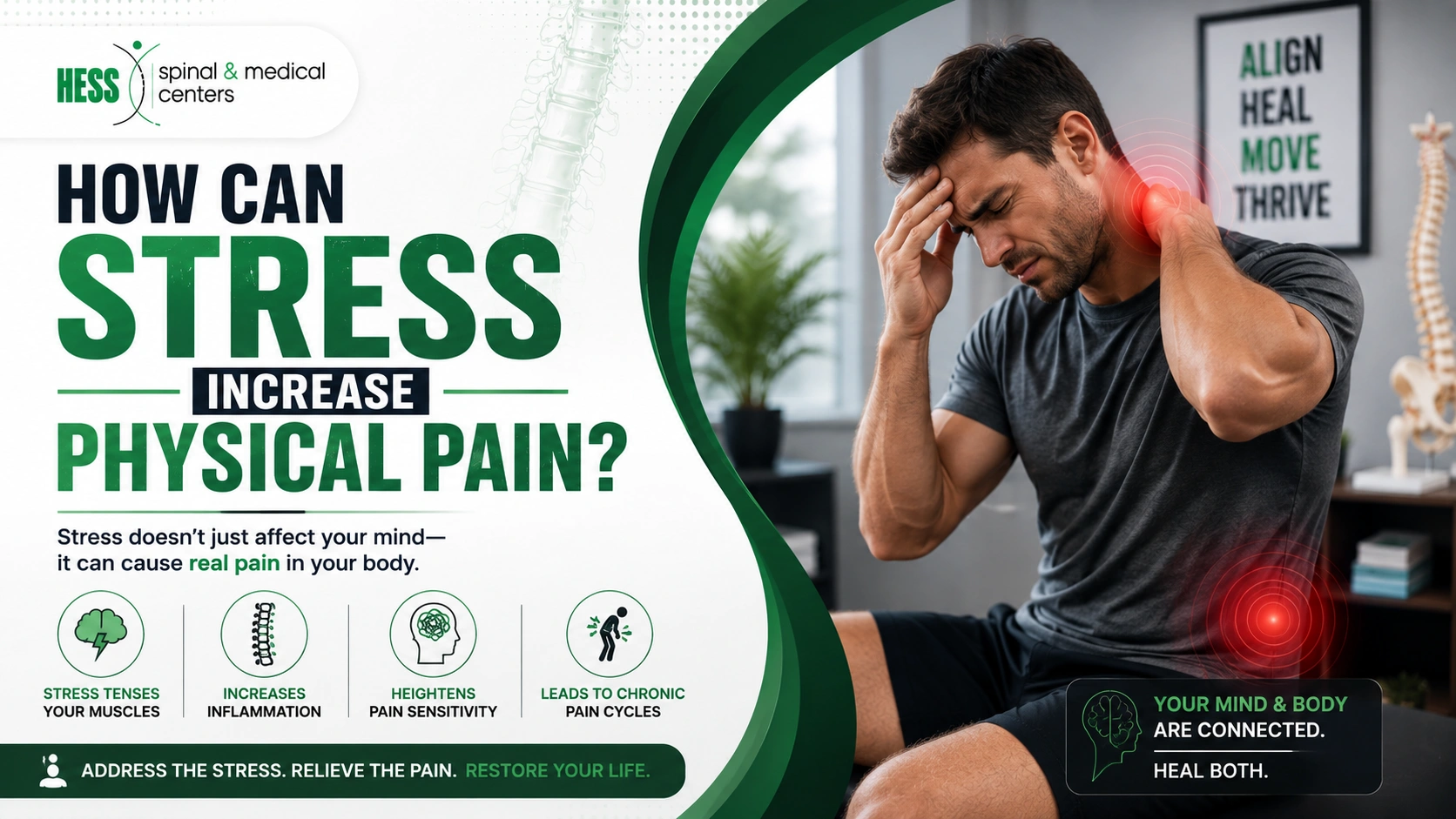
Learn how chronic stress triggers muscle tension, heightens pain sensitivity, and worsens physical pain in your neck and back, along with effective relief options.
Accident Injury Care | Stress & Physical Pain
How Can Stress Increase Physical Pain?
The muscles are forced to be guarded when under stress. While cortisol and adrenaline stay elevated far longer than they should, increasing your already excruciating physical pain. This tightens the neck, back and shoulders. It also lowers the body's pain threshold and slows tissue healing. Chronic stress doesn’t just feel heavy but physically rewires how the nervous system reads pain.
West Central Florida
(800) 618-4377
Same-day evaluations are available at Hess Spinal & Medical Center locations across West Central Florida.
Key Points
- Stress chemicals keep your muscles wound up tight long after the actual tension has passed.
- An exhausted nervous system starts shouting about minor pain signals it would usually just ignore.
- Old injuries flare up when life stress spikes, even without any new trauma.
- Florida's traffic, heat, and hurricane season add a physical stress load most other states don’t carry.
- Left untreated, muscle guarding turns short term stress into long term chronic pain.
What Our Surveys And National Research Confirm
75%
of Americans report physical symptoms tied to stress
83%
of U.S. workers say their job stress shows up physically
8.7%
rise in cortisol per point increase in reported pain severity
1
Stress Not Only Stay In Your Head But Lands In Your Back
Most people think stress is a mood. It’s not. It’s a chemical event. The second your brain senses trouble, whether it’s a real danger or just something you are sweating over, your body releases cortisol and adrenaline. Your muscles brace for impact. That bracing is ancient wiring, built for a saber tooth cat, not a Monday inbox. The APA's Stress in America research shows most U.S. adults now report physical or emotional symptoms tied to stress and the number keeps climbing year over year.
So the stress response fires. Then it doesn’t switch off. Traffic, deadlines, a mortgage, a fender bender you are still fighting your insurance over. Small things, stacked daily. Each one keeps the muscles a little tighter than the last. Give it a few months of that pattern and the tension stops being situational. It becomes structural. That’s when patients start walking into a clinic describing pain that has no clear origin, no fall, no lift, no obvious cause. There usually is one. It has just been building quietly for weeks.
2
Why Does Stress Cause Physical Pain In Florida Drivers and Office Workers?
Florida adds its own layer to this. Tampa Bay now ranks among the worst metro areas in the country for traffic, and drivers here lose roughly 41 hours a year sitting in congestion, much of it crawling across the Howard Frankland or stacked up where I-4 meets I-275. That’s not a minor inconvenience. It’s a daily dose of low grade physiological stress and the body responds to it the same way it responds to any other threat with tightened shoulders and a clenched jaw. As well as a spine that never fully relaxes.
Add Florida's heat, the dread of hurricane season and a job market where 69% of employed adults name work as a significant stressor, and you get a state full of people carrying tension they never intended to hold. Cortisol is the driver here. Short bursts of it are protective, useful even. However, when it stays high for weeks, it stirs up inflammation and makes your nerves incredibly sensitive. Suddenly, just moving around or getting a hug hurts when it shouldn't.
Stress Response Impact on the Body
| Stress Response | What It Does To The Body | Where Floridians Feel It Most |
|---|---|---|
| Cortisol surge | Raises inflammation, keeps pain receptors on alert | Lower back, hips, old crash injuries |
| Muscle guarding | Shoulders, jaw, and neck lock into a braced position | Neck and shoulder tension after I-4 or I-275 traffic |
| Shallow breathing | Reduces oxygen flow to tight muscle tissue | Upper back stiffness, tension headaches |
| Nervous system overdrive | Lowers the threshold at which touch becomes pain | Whiplash and soft tissue injuries that will not settle |
Feeling Tightness and Don’t Know Why?
Our team looks for the real root of the trouble
3
Can Old Injuries Flare Up When Stress Piles On?
Yes, and this is the part car accident patients feel the hardest. A whiplash injury, a strained lumbar disc, a shoulder that never quite finished healing—these tissues stay more sensitive than uninjured ones for a long time after the initial trauma. Stress doesn’t really create a new injury. It reopens the sensitivity of an old one. The nervous system, already primed from the crash gets another jolt of cortisol from an unrelated stressor. And suddenly the same old ache is back at twice the intensity.
We see this constantly at Hess Spinal & Medical Centers. A patient finishes physical therapy, feels good for a month. Then a stressful week at work or a second accident anniversary rolls around and the neck pain resurfaces with no new incident to explain it. That’s the stress-pain loop doing exactly what the research on cortisol dysfunction in pain rehabilitation says it will do. It’s also exactly why a treatment plan built only around the original injury without addressing the ongoing stress load, tends to underperform.
"Pain is almost never just about the muscle or bone. Your nerves remember the fear and stress brings that memory right back to life long after the body has done its best to heal."
4
Tampa Bay Carries A Heavier Stress Load Than Most Of The Country
Our surveys of patients across our Tampa Bay locations show a pattern that lines up with the national data almost exactly. Patients who report high daily stress are far more likely to describe their pain as widespread rather than localized and far more likely to report flare-ups with no clear physical trigger. That distinction matters clinically. Widespread, trigger-free pain points toward a nervous system problem layered on top of a structural one, and treating only the structure leaves the loop running.
This is not unique to any one patient. It is a regional pattern. Florida's population is growing faster than its infrastructure, and that mismatch shows up in bodies before it shows up in headlines.
Reported Pain Flare Frequency By Stress Level
5
Can You Actually Break The Cycle?
You just can’t stretch your way out of a nervous system that’s stuck in alert mode. You also can’t meditate your way out of a whiplash injury that never fully resolved. Breaking the cycle takes both tracks at once. This is where chiropractic care earns its keep. Spinal adjustments do more than realign joints. They interrupt the muscle guarding pattern directly, which lowers the sympathetic nervous system's alert level and gives cortisol a reason to drop.
"We stopped treating stress as a footnote years ago. When a patient's pain keeps returning without a new injury, the stress response is almost always part of the picture, and we build the treatment plan around that reality."
Pair that with physical therapy, hydrotherapy, and targeted trigger point work, and you are not just chasing pain, you are dismantling the loop that keeps generating it. Florida residents dealing with stress that increases physical pain rarely need one appointment. They need a coordinated plan, which is why Hess Spinal & Medical Centers builds multidisciplinary treatment under one roof, X-rays, chiropractic manipulation, and rehabilitation together, so the plan adjusts to what the nervous system is actually doing, not just what the last MRI showed.
Stop Guessing Why The Pain Keeps Coming Back
Walk in for a same day evaluation at any of our 13 Florida locations. No upfront cost under PIP coverage.
Frequently Asked Questions
FAQ
How does the billing work with my PIP insurance?
Personal Injury Protection is there to help you out after an accident. If your pain is tied to a crash, we handle the billing and the paperwork so you don’t need to stress about it.
Will I get an adjustment the same day I walk in?
We don’t jump into treatments until we know exactly what we are looking at. We start with a thorough exam and check your X-rays. If it’s safe and right for your body, we will adjust you during that first visit.
How many visits will I actually need to feel better?
Everyone is different. Some folks feel a real shift in just a few sessions but keep in mind that we are trying to calm down a nervous system that has been wound up for a long time. We work with you to build a plan that’s effective and moves you forward as fast as we can.
Do I need a referral from my regular family doctor
No, you do not need a referral from anyone to come see us. You can just pick up the phone and call directly to get on the schedule.
Disclaimer
This article is provided for general information only and does not constitute medical advice. Individual results from any treatment vary based on skin condition, severity, and overall health. Schedule a consultation to determine the right treatment plan for your specific case.